

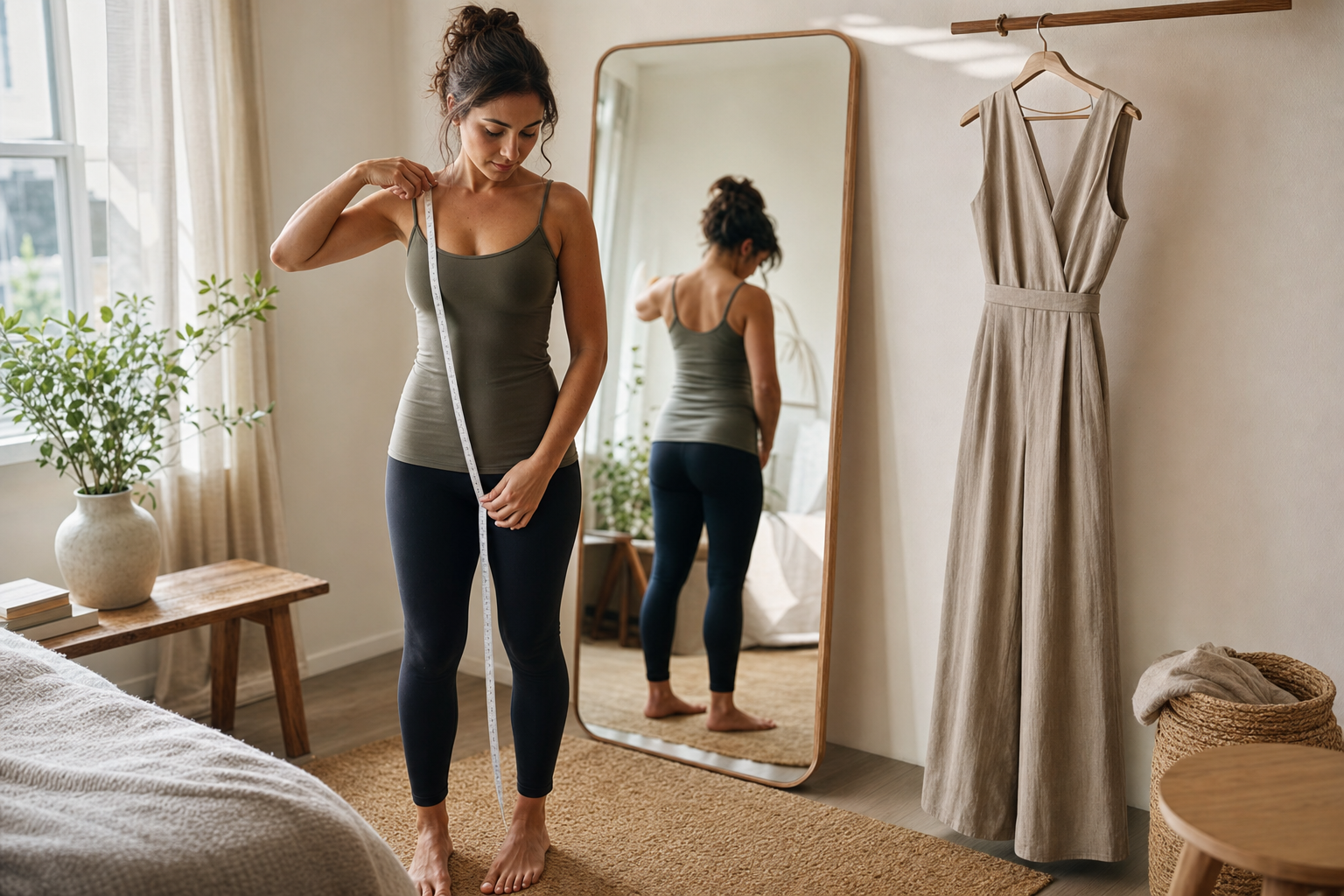
The short answer: measure your torso and inseam before choosing a wide-leg jumpsuit, then compare a similar garment you already own with the current product size chart. Torso length helps predict whether the rise, waist and neckline will sit comfortably; inseam helps predict where the hem will land. Bust, waist and hip measurements still matter, but a one-piece garment must fit all of those areas at the same time.
A size label alone cannot show proportion. Two people with the same height can have different torso and leg lengths, and two jumpsuits in the same labelled size can be cut differently. Use the live product page as the authority for current measurements, materials and variants, and avoid assuming that every style has stretch or can be altered in the same way.
Wide-leg jumpsuit measurements at a glance
| Measurement | How to take it | What it helps you judge |
|---|---|---|
| Torso length | From high shoulder, through the legs, and back to the starting point | Rise, waist and neckline comfort |
| Inseam | From crotch seam to desired hem | Finished leg length with your intended shoes |
| Bust | Level around the fullest point | Upper-body room and closure strain |
| Waist | Level around the point where the style is designed to sit | Waist placement and ease |
| Hip | Level around the fullest hip and seat | Sitting, bending and pocket comfort |
How to measure your torso for a jumpsuit
Use a flexible tape over close-fitting clothing and ask another person to help if possible. Stand naturally rather than pulling your shoulders back or holding in your stomach. Place the tape at the high shoulder point near the base of your neck, run it down the front of your body, between your legs and back up to the same shoulder point. Keep the tape comfortably close without pulling it tight.
This full-loop torso measurement is useful because a jumpsuit connects the top and bottom. If the body section is too short, the garment may pull at the crotch, shoulders or neckline. If it is much too long, fabric may pool around the waist or rise. Some product charts list a shoulder-to-crotch or front-rise measurement instead of a full torso loop, so compare like with like rather than treating different methods as interchangeable.
How to measure inseam and choose the hem
For the most reliable comparison, use trousers or a jumpsuit that already has the wide-leg length you like. Lay the garment flat without stretching it, then measure from the crotch seam down the inside leg to the hem. Note the shoes you normally wear with it: a hem that works with flat sandals may sit differently with a platform or heel.
When measuring on the body, stand straight with your feet comfortably apart and have a helper measure from the upper inner leg to your desired hem. Do not bend to read the tape because bending changes the result. Wide legs can look intentionally long, cropped or ankle-length, so use the product photos and stated inseam together rather than assuming one universal target.
Measure bust, waist and hips consistently
- Bust: keep the tape level around the fullest point while wearing the type of undergarment you expect to use.
- Waist: measure where the jumpsuit is designed to sit, which may differ from your narrowest natural waist.
- Hips: include the fullest part of the seat and keep the tape parallel to the floor.
Record the numbers in either inches or centimetres and confirm the unit used in the product chart. Measure twice. If one area points to a larger size than the others, prioritize the least flexible and most fitted area while considering the intended silhouette. Sizing up can add room, but it may also change the neckline, shoulder placement and rise.
Compare a jumpsuit you already own
Body measurements are only half the picture. A favourite garment shows your preferred ease—the difference between the body and garment measurements. Lay a comparable jumpsuit flat and measure underarm width, waist width, hip width, shoulder-to-crotch length and inseam. Double flat widths only when the chart gives a full circumference. Mark every number as “flat” or “around” so the two formats are never mixed.
Compare wide-leg styles with wide-leg styles. A fitted unitard or stretchy bodysuit will not provide the same useful baseline because its construction and intended ease differ.
Three current Cmfrt Jumpsuit styles to compare
The Women's Casual Wide Leg Jumpsuit is a starting point for comparing a simple wide-leg silhouette. Review its current size information, neckline, waist position and product photos, then compare those proportions with a similar garment you own.
For shoppers who value everyday storage, the Wide Leg Jumpsuit with Pockets offers a second active style. Pockets can affect how fabric sits at the hip, so check the hip measurement and examine side-view photos as well as the front.
The Ultimate Flowy Wide Leg Jumpsuit with Pockets is another current option for comparing a flowy shape. “Flowy” describes the intended visual effect, not a standardized amount of ease. Verify the current chart and listing details before deciding which size best matches your measurements.
Run a movement test before removing tags
Try the jumpsuit over clean, close-fitting clothing and keep the tags attached until you know the store’s current return conditions. Stand, sit, reach overhead, take a long step and bend gently. The neckline should remain where intended, the shoulder area should not pull sharply, and the crotch should not feel restrictive. Pockets should stay usable without forcing the side seams forward.
Then test the hem with the shoes you plan to wear. A very long hem can catch underfoot or drag on the ground. If tailoring is needed, consult a qualified alterations professional before changing the garment, especially when hems, linings or decorative details are involved.
Dress for summer occasions without overclaiming comfort
A wide-leg jumpsuit can be a convenient one-piece choice for summer dinners, travel days or casual events, but comfort depends on fit, fabric construction, weather and activity. Check the listed fibre content, lining and care information. Do not assume a garment is breathable, moisture-wicking or sun-protective unless the product specifically provides support for that claim.
For outdoor events, the Government of Canada’s sun-safety guidance recommends combining shade, protective clothing, a wide-brimmed hat, sunglasses and sunscreen. A fashion jumpsuit should not be treated as having a tested ultraviolet protection factor unless one is stated.
Care starts with the attached label
Garment care depends on fibre, dyes, trims and construction. Photograph the care label before the first wash and follow it rather than a generic internet method. The U.S. Federal Trade Commission’s Care Labeling guidance explains the role of care instructions, while the Government of Canada’s clothing and textiles guidance discusses fibre-content information for comparing garments.
Empty pockets, secure fasteners as directed and avoid higher wash or drying temperatures than the label permits. Wide legs can twist around other items in a crowded machine, so use the specified cycle and load guidance. Never assume every jumpsuit can be tumble dried or ironed at high heat.
Pre-purchase checklist
- Measure torso, inseam, bust, waist and hips twice.
- Confirm whether the chart uses body or garment measurements.
- Check inches versus centimetres and flat width versus circumference.
- Compare a similar wide-leg garment you already like.
- Review current materials, lining, care, shipping and return details.
- Test sitting, reaching and walking before removing tags.
Frequently asked questions
Which measurement matters most for a jumpsuit?
Torso length is especially important because the garment joins top and bottom, but it cannot replace bust, waist, hip and inseam measurements. Use all of them together.
Should I size up if I have a long torso?
Not automatically. A larger size may add torso room but also change width, neckline and shoulders. Compare the style’s current garment measurements and consider whether another cut offers a better proportion.
How long should a wide-leg jumpsuit be?
The intended look, your height and your shoes determine the answer. The hem should achieve the style you want without creating a practical tripping or dragging problem.
Can a jumpsuit inseam be altered?
Many simple hems can be shortened, but construction, lining and details vary. Ask an alterations professional to assess the actual garment before making irreversible changes.
What if I am between sizes?
Prioritize the least flexible fitted area, the intended ease and the store’s current size chart. A garment measurement from a jumpsuit you already like can make the choice more concrete.
The takeaway
A better wide-leg jumpsuit fit starts with proportion, not the size label. Measure torso and inseam, confirm bust, waist and hips, and compare a similar garment before ordering. Then use a real movement test and the attached care label to protect the fit you chose.